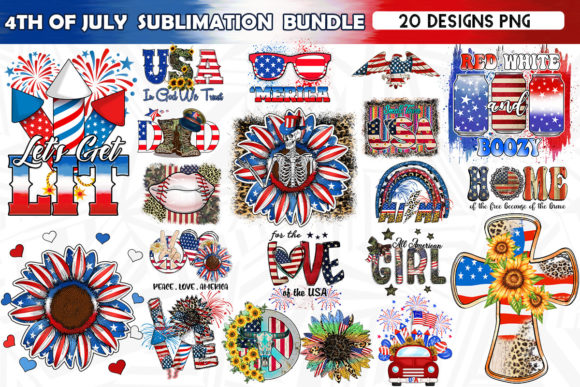
4th of July Sublimation Bundle Part 1
As a designer who spends half my life staring at digitized stitch paths and the other half worrying about whether a client’s budget will cover the thread costs, I approach every new design asset with a mix of excitement and skepticism. When 4th of July Sublimation Bundle Part 1 landed in my inbox, I didn’t just look at the preview image; I looked at it through the lens of production reality. We are talking about holiday-themed graphics that need to survive the transition from digital file to physical textile without losing their soul—or their structural integrity.
The category here is clearly Crafts, specifically falling under Graphics. This distinction matters because it tells me immediately that this is not a pre-digitized machine embroidery file ready to punch out. It is a sublimation bundle, primarily consisting of high-resolution PNGs. For those of us in the handmade business, understanding this difference is the first step toward avoiding costly mistakes. The product description notes that these are PNG files at 300 DPI with transparent backgrounds, which is excellent for versatility, but it also explicitly states that SVG files cannot be created. This limitation actually helps clarify the intended workflow: this bundle is designed for direct printing or as a base for manual digitizing, not for simple cutting or vector-based scaling.
First Impressions and Visual Personality
The mood of 4th of July Sublimation Bundle Part 1 strikes me as festive but structured. Fourth of July designs often fall into two traps: they are either too cluttered with patriotic clichés (eagles, stars, stripes all fighting for attention) or too minimalist to evoke any emotional response. From what I can see in the layout, this bundle leans into a balanced aesthetic. The shapes feel intentional, suggesting a design that would translate well to both modern boutique branding and traditional craft fair aesthetics.
For an embroidery designer, the visual personality is key. Does the graphic have enough negative space? Are the lines bold enough to hold up when converted to satin stitches? The 300 DPI resolution ensures that when you scale this down for a small patch or zoom in for a large tote bag print, the edges remain crisp. This clarity is crucial for maintaining brand consistency. If your custom apparel looks pixelated or muddy, customers assume the quality of the stitching is poor, even if the embroidery itself is flawless.
Real-World Application: The Tote Bag Scenario
Let’s imagine a real project. You are preparing for a summer craft fair and want to launch a line of personalized gift items. You decide to use 4th of July Sublimation Bundle Part 1 on canvas tote bags. This is a classic handmade product that sells well, but it presents specific challenges. Canvas is a textured fabric, and heavy ink saturation from sublimation can sometimes stiffen the material, affecting the drape of the bag.
If you are using these graphics as a guide for a screen print before embroidering a logo, the transparency of the PNG is a huge advantage. You can layer the design over different colored fabrics in your mockup software to ensure contrast. However, if you are planning to turn this directly into an embroidery project, you must consider how the colors interact. A bright red star might get lost on a heather gray background unless you use a contrasting thread color or add a stabilizer layer underneath. The reviewer in me says: test the thread color contrast rigorously. What looks vibrant on a backlit monitor can look dull under the harsh lights of a craft booth.
Performance in Embroidery Situations
While this is technically a sublimation bundle, many Etsy sellers and small shop owners use these assets as reference points for creating their own machine embroidery designs. Here is how 4th of July Sublimation Bundle Part 1 performs in various scenarios:
- Custom Apparel and Sweatshirts: These items benefit from bold, central placements. The resolution allows for detailed elements that won’t blur when enlarged. Just be mindful of the stitch density; if you are digitizing this yourself, avoid making the fill stitches too dense, or the sweatshirt will feel like cardboard.
- Baby Clothes and Nursery Decor: Softness is paramount. For baby embroidery, you want lighter thread counts and softer colors. If the design features intricate details, ensure they are large enough to be stitched cleanly on delicate fabrics. Tiny lettering or fine lines often fail on baby items, leading to frustrated parents and bad reviews.
- Holiday Gifts and Kitchen Towels: Tea towels and aprons are great for showcasing the full graphic. The applique design potential here is high. You could cut out shapes from contrasting fabric and stitch them down, mimicking the sublimation look with thread. This adds texture and perceived value to the finished product.
- Embroidered Patches: If you plan to make iron-on patches, the transparent background PNG makes it easy to isolate the main motif. Ensure there is enough border space for a satin stitch edge so the patch doesn’t fray after frequent washing.
Where to Use Carefully
No design is perfect for every surface. There are specific situations where 4th of July Sublimation Bundle Part 1 requires caution:
- Small Hoop Sizes: If the design contains tiny details or text, shrinking it to fit a 2x2 hoop may result in a muddled mess. Always inspect small details before committing to a small format.
- Textured and Stretchy Fabrics: On jerseys or ribbed knits, maintaining registration is difficult. The design might shift during stitching, causing misalignment. Use a proper stabilizer and consider hooping the stabilizer separately if possible.
- Dark Fabric: Sublimation works best on white or light polyester. If you are adapting this for embroidery on dark cotton, you will need a heavy backing or a base layer of light-colored thread to prevent the dark fabric from showing through the stitches.
- Curved Surfaces: Caps and hats present a challenge. A flat graphic may not conform naturally to the curve of a cap front. You may need to adjust the digitization to account for curvature, or the design will look distorted.
Practical Designer Notes
Before you start producing commercial embroidery pieces using this bundle, follow these practical steps:
Test on Scrap Fabric First: Never go straight to the final product. Stitch the design on a scrap piece of the same fabric type you plan to sell. Check how the thread colors render and how the fabric reacts to the needle penetration.
Check Licensing: Since this is a digital product seller’s asset, verify the commercial use rights. Can you sell unlimited finished items? Is there a limit on the number of units? Confirming licensing protects your craft business from legal issues.
Review Stitch Density: If you are digitizing this yourself, pay attention to the stitch density. Too much density wastes thread and time; too little leaves gaps. Aim for a balance that ensures durability without bulk.
Use Proper Stabilizer: The choice of stabilizer—cut-away vs. tear-away—depends on the fabric and the garment’s end use. For washable items like tote bags and aprons, a cut-away stabilizer provides better long-term stability.
Black and White Mockups: Convert your design to black and white to check contrast and composition. If the design relies solely on color differentiation to work, it may fail in monochrome contexts or when viewed by customers with color vision deficiencies.
Final Verdict
4th of July Sublimation Bundle Part 1 is a solid resource for creative entrepreneurs looking to capitalize on holiday trends. Its high-resolution PNG format offers flexibility for both direct sublimation and as a reference for custom digitizing. While it lacks the convenience of pre-made embroidery files, its clarity and thematic appeal make it a worthy addition to any design assets library. By testing carefully and respecting the limitations of different fabrics and hoop sizes, you can transform these graphics into high-quality, marketable personalized gifts that stand out in a crowded marketplace. Whether you are an Etsy seller or a hobbyist maker, this bundle provides the visual foundation needed to create professional-looking embroidery projects that customers will love.